
WikiLeaks, and the Past and Present of American Foreign …

On April 5, 2008, a small coterie of Republican senators and diplomats John Barrasso, Saxby Chambliss, Mitch McConnell, and James Risch, among othersheld a quiet meeting with then Egyptian President Hosni Mubarak at the Heliopolis Palace in Cairo.

The setting was regal. Designed in the early twentieth century by a Belgian architect, the one-time luxury hotel had been remade as Mubarak's home and workplace in the 1980s. Blending Arabic, European, and Persian architectural styles, the complex embodied purposefully Egypt's place at the crossroads of the pan-Islamic and pan-European worlds.

The conversation slid naturally to current events as the group settled down to talk.

After a brief back-and-forth about Israel, Mubarak turned to Iraq. "My dear friends," he began, "democracy in Iraq equals killing. The nature of those people is completely different. They are tough and bloody, and they need a very tough leader. They will not be submissive to a democratic leader."

Stability required an authoritarian fist.

"As I told Secretary of Defense Gates last year," Mubarak continued, "the only solution [to America's desire to leave Iraq] is to strengthen the military and security forces, arm and train them, wait for the emergence of some generals, don't oppose them, then stay in your camps in the desert and don't interfere. The military will control Iraq like the ayatollahs control Iran."

Twenty-eight years in power, and Mubarak's worldview amounted to a simple adage: never "mix democracy and tribalism."

The transcript drips with irony when read from the present.

It was sent to the Department of State by U.S. Ambassador Margaret Scobey on April 8, 2008. It allegedly comes to us via Private First Class Bradley Manning, who sits now in a U.S. military prison, awaiting trial for passing along 251,287 such cablesonly 2,000 of which are available online currentlyto the media organization known as WikiLeaks.

Manning's fate and the imbroglio surrounding Julian Assange, the controversial figure who shared the cables with the world, has faded somewhat from the headlines in recent months. Yet the WikiLeaks communiqus reveal much about America's role in today's world.

In the words of author Timothy Garton Ash, the documents are a "historian's dream" and a "diplomat's nightmare"a spigot of information from the contact points of American power, where powerbrokers and diplomats go daily through the motions of statecraft.

Leaks, Yesterday and Today

In the United States, politicians have hyperventilated over the WikiLeaks story since it broke in 2010.

Despite the fact that most foreign leaders quickly dismissed the material as blas, American leaders have framed Assange and Manning as unambiguous enemies of the international community.

Internal dissentvoiced notably by (now former) State Department spokesman P.J. Crowley, who criticized the U.S. government's imprisonment of Manninghas been cast as inexcusable and irresponsible.

But the American ship-of-state has long been a leaky boat.

George Washington reprimanded Alexander Hamilton for passing material to the British during the 1794 Jay Treaty negotiations, and James Madison castigated his secretary of state for giving administration secrets to members of the opposing Federalist Party.

There has been no shortage of leak-related precedents since then.

In 1848, as the United States' war with Mexico drew to a close, Senate investigators placed a journalist under house arrest for the first time because he refused to disclose how he obtained details about the not-yet-complete peace treaty.

At the height of the First World War, lawmakers considered making it illegal to leak state information to the public, but changed their minds because of first amendment concerns, opting instead for legislation that criminalized the act of relaying defense secrets to the enemy during wartime.

The most notorious leak in U.S. history came in the early 1970s, when Daniel Ellsberga Princeton-educated analyst who worked for Secretary of Defense Robert McNamara during the 1960sdelivered a 7,000-page Pentagon report to The New York Times, and later The Washington Post.

Unprecedented in scope, the collection of top-secret materials revealed that Lyndon Johnson's White House had lied systematically to the public about the rationale behind America's involvement in Vietnam.

Richard Nixon tried to use an injunction to stop the material's publication in 1971, setting another historical precedent in the process, but failed at the Supreme Court.

The ethics of leaking have never been straightforward. Nixon's own contradictions were on full display as he and his advisors formulated their response to Ellsberg:

Nixon: "Let's get the son of a bitch into jail." Henry Kissinger: "We've got to get him." Nixon: "We've got to get him ... Don't worry about his trial. Just get everything out. Try him in the press ... Everything ... that there is on the investigation, get it out, leak it out."

Such conviction, of course, facilitated Nixon's undoing, but the implications were clear and the sentiment was probably felt widely among American elites: leaking was bad when it violated the interests of power.

Or, as columnist David Corn said once, there are leaks "that serve the truth, and those that serve the leaker."

The second Bush administration blurred this line frequently.

White House staff members gave the identity of CIA agent Valerie Plame to columnist Robert Novak after her husband, Ambassador Joseph Wilson, criticized the rationale for the 2003 Iraq invasion.

Bush himself passed along (selectively chosen) top-secret documents to reporter Bob Woodward for the 2002 book, Bush at War.

Wheat from the Chaff

Each of these leaks tells a different historical story.

The Plame affair underscored the politicization of information in our fractured age, when partisans compete with cynical glee to mold Washington's weekly narrative.

Ellsberg's papers exposed the contradictions of an earlier epoch, highlighting the tenuous underpinnings of the global Cold War, particularly in Southeast Asia.

Controversies from the nineteenth and early twentieth centuriessharpened often by war and codified through lawoffer windows into the rise of the modern state, and highlight how the U.S. government came to police its inner correspondence.

And the experiences of the founding fathers hint at an era now long past, when leaders navigated questions of secrecy with little consideration of bureaucratic power.

So given this long leaky history, what makes the WikiLeaks material so interesting?

Size mattersthere is a lot of information in the 251,287 cablesbut the documents differ from previous leaks.

For one, they draw on different source material.

Unlike Ellsberg, Manning did not have access to top-secret reports. Most of the information he downloaded from his desk at a military base in Iraq never reached the Oval Office. It is likely that few of his cables even made their way to the seventh floor of the U.S. State Department, where America's top statesmen manage the daily business of U.S. foreign relations.

Moreover, the documents do not lend themselves to a Plame or Ellsberg-like controversy.

There are embarrassing tidbits here and theregossipy assessments of foreign leadersand heart-wrenching details from the battlefields in Afghanistan and Iraq. But Washington's foreign officers come across mostly as professionals.

As commentator Fareed Zakaria opined, "Washington's secret diplomacy is actually remarkably consistent with its public diplomacy" this time around, unlike during the Vietnam War, U.S. diplomats are undeniably "sharp, well informed, and lucid."

What emerges from the WikiLeaks material is a story that features not the great men and women of Washington but the mid-level officials who work in U.S. outposts around the world.

These are the individuals who conduct American diplomacy on the ground. Their correspondence is dominated by neither turf battles nor policy debates, but rather a continual effort to collect accurate information, analyze trends, and advance U.S. interests in the world.

Looking through the eyes of such individuals reveals much about U.S. foreign relations, especially in the American hinterlandthat zone of exchange at the outskirts of Washington's political influence.

The WikiLeaks documents showcase the common priorities of the officials who enact American policy in this region, and they tell scholars something about the challenges of U.S. foreign affairs in the early twenty-first century.

Things have changed certainly since the end of the Cold War, but they haven't changed as much as one might suspect.

Small States, Big Allies

Washington's global influence today is deeply contested. To a degree that might surprise both boosters and detractors of America's foreign policy, negotiation is the motif of the WikiLeaks documents.

Whether dealing with special friends or political afterthoughts, U.S. diplomats rarely dictate the terms of international exchange. They are caught instead in a continual two-way conversation that often obfuscates the asymmetrical nature of Washington's military and economic resources.

The examples are almost endless.

Take Yemen: residing at the outskirts of the Arab world with a harsh climate and a small population, there is little reason the country should possess any leverage over the U.S. policymaking establishment. Unlike Saudi Arabia, it possesses few oil reserves or regional cloutonly the strategic port city of Aden, which provides access to the waters between the Red Sea and the Indian Ocean.

Read the original post:
WikiLeaks, and the Past and Present of American Foreign ...
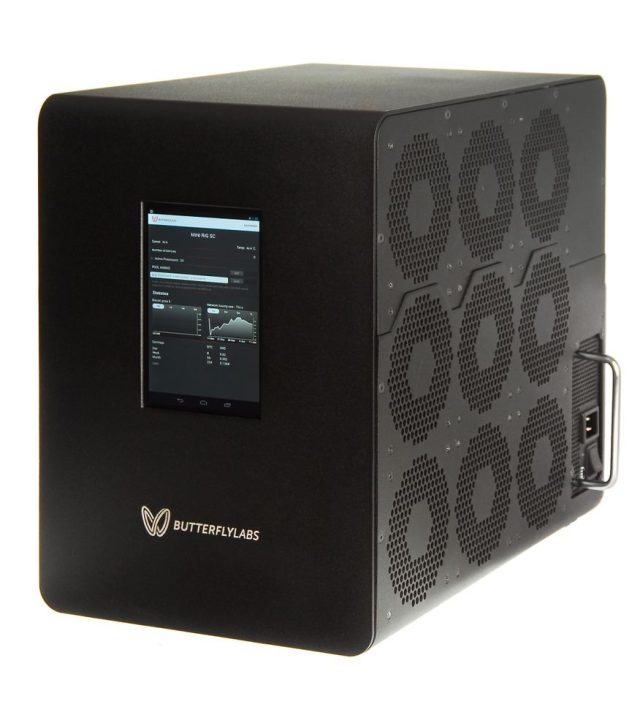
New lawsuit against Bitcoin miner manufacturer alleges fraud, negligence

New lawsuit against Bitcoin miner manufacturer alleges fraud, negligence
For months now, Butterfly Labs has faced anger regarding delayed orders.

http://arstechnica.com/tech-policy/2014/02/new-lawsuit-against-bitcoin-miner-manufacturer-alleges-fraud-negligence/

One of the world’s most mysterious Bitcoin-related companies is now facing its first civil lawsuit in a United States federal court, with many more likely on the way.

Last summer, Ars reported on Butterfly Labs (BFL), which makes ASIC-based Bitcoin miners. In other words, BFL builds little boxes with specialized chips that do nothing but compute hashes in the Bitcoin blockchain—a process which can lead to real money for the miners. Given that the value of Bitcoin has skyrocketed in recent months (hovering around $820 per bitcoin as of this writing), mining coins when their value is lower is clearly profitable.

Martin Meissner, a German-Polish man who lives in China, placed an order for a BFL miner back in March 2013 but ultimately never received his order. He alleges that he spent over $62,000 to order two 1500 gigahash-per-second Bitcoin miners. To date, he has not received a refund for his payment. His lawsuit, filed in December 2013, accuses BFL of breach of contract, fraud, and negligent representation.

Neither BFL nor its attorney, James M. Humphrey, responded to Ars’ repeated requests by phone and e-mail for comment.

Meissner’s attorney, Robert Flynn, told Ars that he has already been contacted by “multiple” people, including other local attorneys with similar complaints, although this is the first suit that he’s filed. If Meissner’s case is successful, it appears likely that it could pave the way for future litigation against BFL.

On Tuesday, BFL filed a motion to dismiss the complaint “for failure to state a claim on which relief can be granted,” adding that “Plaintiff is not entitled to consequential damages as a matter of law because they are too speculative.” Further, because Meissner paid via his own company’s bank account, he personally lacks standing under the Kansas Consumer Protection Act.

“I first contacted BFL and asked for a delivery date, and a long time passed without any response,” Meissner told Ars. “So I went ahead and requested a refund. When BFL responded to the request and rejected the refund, I saw no other way out than to seek an attorney’s help.”

Meissner’s attorney, Robert Flynn, told Ars that he recently spent days trying to arrange for a settlement on behalf of his client.

“I offered an opportunity to reach a settlement before things really ramp up and they made an offer, but it’s clear that they’re not serious about reaching a settlement so we’re going to push ahead with the lawsuit,” he said, declining to name a precise figure. “I can tell you that [the settlement amount] was less than the refund of what my client paid, which is like: ‘Come on man!’ Just [as it says in] the complaint, we’re asking for consequential damages. My client isn’t money grubbing. This isn’t the McDonald’s coffee case, trying-to-get-rich lawsuit. He was trying to get a refund in October [2013] and the response was not responded to and so we filed a lawsuit.”

Butterfly Labs previously lost a civil case by default in Kansas’ Johnson County Court in late November 2013. The plaintiff, a Californian named William Lolli, won a judgement of over $13,000 but told Ars that he had not yet collected the award.

“WTF is wrong with you?”

While Meissner and other customers have been extremely frustrated at the lack of communication and lack of shipment from Butterfly Labs, the Kansas-based startup did send Ars one of its low-end boxes. Ars editor Lee Hutchinson successfully used the box to mine what then amounted to around $600 in bitcoins. Hutchinson then sold them for a US money order and cashed out. (We donated the entire sum to the Electronic Frontier Foundation.)

Prior to getting involved with ASICs, BFL had some experience in the Bitcoin mining business; it had previously made and sold around 2,300 slower Field-Programmable Gate Array (FPGAs) miners from September 2011 to September 2012, earning at least $1.6 million in revenue. In June 2012, BFL started taking orders on the ASIC-based boxes, which ranged in price and capability from $274 for a 5GH/s (gigahashes per second) unit to $22,484 for a 500GH/s machine.

Soon after, new orders for the next-generation machines flooded in. The privately held company won’t say how many orders it received, but if one site inviting customers to add their orders to a public list is to be believed, BFL has taken in at least 7,600 orders worth $10.3 million—and the actual numbers may be higher.

But then, over a year after the first orders were placed, hundreds of angry comments and reddit threads and tweets flooded in. (Example: “WTF is wrong with you? You can't deliver shit yet u take more $$? Stop fucking delaying Singles on purpose!!”) BFL shipped its first machines in early June 2013. One customer tweeted in December 2013: “Sent 2 emails, left 2 VM's. Looking at the replies, I'm not alone. Unacceptable. Emailing [Better Business Bureau] & Consumerist next.”

That frustration has continued through to the present day.

“BF Labs believed it had received payment for a non-existent order”

According to Meissner’s original complaint, the dispute comes from a strange circumstance during which Meissner made a March 25, 2013 wire transfer payment from his company, TradeMost Enterprises Ltd. This apparently confused BFL, which did not acknowledge his order. When he inquired further on May 2, the company responded to him by e-mail:

We received your money but the bank tells us only “Trademost Enterprises Ltd” so we were not able to match your payment to your order until we got your email. I have received your payment and sent a copy of your invoice for your records. Your order is processing (paid).

However, Meissner never received his order.

While BFL appears to not have made any public statements concerning this lawsuit, one of its managers responded in late January 2014 in a “Declaration of Support,” outlining the company’s perspective.

That 55-page document, authored by David McClain, the “Large Accounts Manager” at BFL, states that the company “reserved the right to handle refund requests on a case-by-case basis.” It says:

As is the case with most technology, new generations of products are introduced over time with more advanced capabilities. In the case of the product generation (65nm) that Plaintiff pre-ordered, BF Labs experienced technical delays in its development that held up manufacturing the new technology at commercial scale.

When BF Labs had resolved the issues and was ready to commit the orders to the final stages of manufacture, an email notice was sent to customers advising that orders would be shipped as produced and that if anyone was unwilling to endure the wait, they had a final opportunity to cancel their order and receive a full refund.

This notice was sent May 1, 2013 to customers with fully paid up orders, and after May 1, 2013, anyone who placed a new order viewed an on-screen “pop-up” message that advised them of these terms.

In this case, Plain filled out an online order form on March 25, 2013 but did not follow through with his promised payment, effectively abandoning his potential order.

Thirty days after Plaintiff abandoned his potential order, on April 24, 2013, after the price of Bitcoins had risen significantly and BF Labs had increased its device prices, TradeMost Enterprises, Ltd. remitted payment of $62,598 but failed to place any order number on the memo in the wire-transfer as instructed by BF Labs. As a result, BF Labs believed it had received payment for a non-existent order and had to wait for TradeMost to contact it to resolve the unmatched payment.

But Flynn, Meissner’s lawyer, finds this explanation baffling.

“I think it’s pretty disingenuous to say it’s [Meissner’s] fault,” he told Ars. “If he had never e-mailed, what were they going to do? Were they the kind of people that were going to keep $63,000? It’s funny, the blame-shifting game they’re playing. I find it distasteful, the lack of responsibility.”

Love in the Time of Cryptography – Backchannel

Ill tell you this much about him: He has soft eyes and a wonderful smile. Hes taller than me. Hes very good with computers. His accent in English is terrible. He likes his privacy.

In 2016, after several years of a simple and warm love affair, we hit a snag. We had decided to live together, and that I would emigrate to Europe. But to do this, we had to prove our relationship to the government. The instructions on how to do this skewed toward the modern forms of relationships: social media connections; emails; chats; pictures of the happy couple. He read through this, and showed it to me. We both laughed. Our relationship had left few traces in the digital world. We had none of these things.

We met a few years before at a drinks night for a hacker collective. A mutual friend introduced me by name, and him by handle. I liked him instantly. We chatted for a few moments, but I had to run. I set up a time to meet up with him later that weekend, and then missed it after falling ill.

Oh well, I thought, so much for that.

We bumped into each other a few weeks later on a public IRC channel, and I recognized his handle. IRC (Internet Relay Chat) is a massive chat system, like a command-line version of Slack. In fact, Slack is a fancy interface for IRC with added features, but no added privacy. An IRC server knows everything you say on it, just as the Slack servers do. I told him that Id still love to chat, but he warned me that he didnt come to IRC much. I gave him my Jabber address, and suggested that we continue our conversation privately. This time, we managed to chat.

Jabber is different from most chat protocols in that its decentralized. Theres no Jabber-the-company with only Jabber servers, like there is in the cases of Google or WhatsApp. This meant we could use servers run by whomever, in whichever country we liked. My only contact for this mysterious man (whom I hadnt been able to stop thinking about) was this Jabber address, which he had configured to refuse any unencrypted messages. Jabber itself doesnt encrypt messages, but another protocol called OTR (Off-The-Record) creates a layer of encryption inside other communication systems. It would be as if I called you, but the conversation were in a secret language only we knew. Someone could tap the line and listen, but they wouldnt understand us. OTR has another property, called Perfect Forward Secrecy. With Perfect Forward Secrecy, new encryption keys are created for every session, so that even if one is broken, its only broken that one time. It doesnt give an interloper any more access to messages in the future, or past. It would be as if when I called you, we invented a new language to communicate every time we spokea new language we both understood instantly, every time.

We started a conversation this wayintimate, privatein our textual world for two; its a conversation that is still going. Most Jabber clients are smart enough to realize that if youre encrypted, you dont want to log conversations, and that was our case as well. Those chats in the early days are gone. Some live in my memory, some in his, but most are as lost and fragmented as conversations in the rain.

I do remember I complained to him a lotabout journalism, sources, stories, writing; about trying to do something important. He always seemed to listen and care, in the strange body language that lives in chat pauses. He was sensible, positive, and encouraging. I remember that I told him I was frustrated with being a woman trying to write longform subjective journalism, and that I felt there was so much I wasnt socially allowed to do. He asked me about it more, and I listed out all the ways I felt my gender was limiting my writing. He was quiet for a moment, and then reposted my list to me in our chatbut as a to-do list. I looked at my computer and took a deep breath. I wanted to cry, but I also felt like it was time. I took that to-do list, and turned it into my final, longest, and best piece of journalism for Wired. But he doesnt remember this, and has to trust me that it happened. In an age in which every relationship is automatically documented, this one has remained ephemeral, contained in the shifting sands of our human memorythe way all relationships used to be.

I feel like what we keep in our minds is more important, he wrote to me over WhatsApp recently. The accuracy of it ismah. This is his disdain for this digital accuracy, and it captures something. Theres an obvious, almost legalistic veracity of moment-to-moment logging, but that loses a truth that the impressionism of memory catches better. I didnt fall in love with him word by word or sentence by sentence. I fell in love with him slowly and steadily through time, in the spaces between the words, held up by the words. Losing the words sometimes feels frustrating, but that forgetting also removes the scaffolding from a finished pasta past that was never really containable in a logfile.

As those first weeks stretched into months, he became my imaginary friend, the person who no one else knew was there. We spoke every day, usually on OTR, always encrypted. When we passed files using unencrypted file sharing programs and websites, wed first encrypt them with command line tools and share decryption passwords in our OTR chats.

These were not easy to use, and required long and esoteric commands, such as:

> openssl aes-256-cbc -a -salt -in for-you.mp3 -out for-you.mp3.enc

This meant that though our communications were on the open internet, they were just meaningless blobs of text without the password wed shared over chat. I read him poems into a microphone and sent them to him. I sent him pictures. I dont remember many specifics, and I cant look them up now, but I remember I loved it.

I wanted a way to communicate on the phone. We used TextSecure and RedPhone (which later became Signal). We sent pictures to each other usually me to him, and usually pictures of funny things Id seen in my day. I found myself in London, and jokingly (not at all jokingly) tried to get him to come visit me. He demurred, but countered that I could come visit him a bit later in Luxembourg. A few weeks later I was in Paris Gare de lEst, cash-bought ticket in hand, boarding an express train to the main station in Luxembourg City.

I still didnt know this mans legal name. I didnt even realize that Luxembourg was a different country. We had a lovely weekend. I told him, I want to show you a movie to help you understand my culture and my people, and I showed him a John Carpenters Big Trouble in Little China. We sat, side by side on a couch with a laptop balanced across our thighs, and watched it. He told me at the end that he liked it very much. We walked around the city in the daytime, sitting in parks and eating takeout food together. We talked about the internet, activism, journalism, and computers. By the end of the weekend I knew his name, but I still called him by his handleI was used to it.

Everything was still platonic, but I knew I didnt want it to be.

Several months later, we went together to Berlin. Standing on a friends balcony in the middle of the night, I asked if I could kiss him, and he said yes.

Not long after, I came to the attention of a media storm after being struck by a tragedy. My life imploded, and between grieving and dealing with media controversy, my days became a sickening tragicomedy I couldnt turn off. He became my refuge; his apartment became the only place I felt safe. He looked after me, made sure I was eating, held me, walked with me, and let me cry on him. At the moment when we might have become more public as a couple, he didnt want any part of my media ordeal. If a reporter calls me, I will be very mean with them, he told me. I laughed and agreed. I didnt want any part of it either. But when I was away, he was still with me, checking in over the encrypted links wed built. I dont remember much of that terrible time, but I remember the sense that he was there, quietly present, from thousands of miles away.

There are few pictures of us together. Very few were taken by us; neither of us are much for selfies. Those that do exist, we ask our friends to keep offline.

We know that the vague and soft anonymity of our relationship probably wont last forever. And I doubt there will ever be a surfeit of digital connections between us. Our phones trace the paths we walk together, existing in telecom databases (and more recently, in WhatsApps logfiles) long after weve moved on. Their cell tower and GPS logs are like a pair of maze paths with no walls, lines coming together and parting, and coming together again. But what we said on those walks is lost, even to us. Only the feelings, memories, and paths remain.

Those paths have traced across three continents now, traveling together, often visiting friends. We are not at all a secret couple. Our friends and communities know us as a couplewith something of an information security bent. Introducing him to my friends and family (first by handle, then later by name) has been one of my great joys. Im intensely proud of him, and still a bit giddy that I get to spend time with him.

My love affair has taught me that the age of data makes time solid in a way that it didnt used to be. I have a calendar and email archive that nails down the when/where/who of everything Ive done. I know when my kid was here; the last time I saw a friend in New York; exactly what my last email exchange with my mother was. Not so with my lover. Time is a softer thing for us. Sometimes it seems like hes always been there, sometimes it seems like were a brand new thing. Every other relationship in my life is more nailed down than this one.

Every time I look at an old mail, I feel weird, like I prefer the memory I have of a thing than the accurate recording, he told me.

He doesnt mean an email from me. We have never exchanged email.

Ill tell you a little more about him: He tolerates no nonsense. He expects clear and timely communication and honesty. He rarely sees the point of being subtle, especially on important matters. We make things plain to each other. Over the years, inside our little tunnels of encryption, we told our stories, explained ourselves to each other. We became quiet voices in each others minds. In the absence of a perfect record, we settled for trust.

So it was, in 2016, we had to document our relationship to the satisfaction of the modern nation-state. At the bottom of the government instructions for how we could do this, there was one old-fashioned option left to usletters from friends and family attesting to our love. So thats what we gathered.

One friend wrote in his letter:

Another wrote:

I dont know if anyone in the government actually read the lettersgovernments these days have a flawed love for metadata over actual informationbut we did. Having your friends and community testifying to your love beats all the selfies in the world.

Either way, I received my Carte de Sjour, the governments permission to live with my lover in Europe, and I moved to be with him.

In May of last year we went back to Berlin. I took him, naturally, to the Stasi museum. When we got to the directors old office, I took a deep breath and proposed to him. Instead of a ring, I gave him a USB key. (Bought with cash, and Im not telling you what was on it.)

He said yes.

Then he looked at me quizzically, and asked, Is this why youve been so nervous this week?

Yes! Its incredibly nerve-wracking! I said, and we went for coffee. So thats how it all happened.

But youll have to take my word for it.

Visit link:
Love in the Time of Cryptography - Backchannel

No Incentive? Algorand Blockchain Sparks Debate at Cryptography … – CoinDesk

"Can you say anything about incentives in Algorand?"

That question was directed to Silvio Micali, an MIT professor who had just delivered a keynote on his theoretical proof-of-stake (PoS) system at the Financial Cryptography and Data Security conference in Malta, yesterday. And the Turing-award winner's answer set a few back on their heels.

"Incentives are the hardest thing to do," Micali said.

In 30 years as a cryptographer, he had spent the last 10 working on just that issue.

As he explained, when you put incentives out there, people learn how to use those incentives for making money in ways that are nearly impossible to predict. He pointed to bitcoin as a prime example, saying its creator probably never imagined bitcoin'sincentive structure would lead toindustrial-scale mining pools.

Micali also argued that users do not need to be rewarded for trivial computations. And that while bitcoin miners are compensated for their work, validators, who in contrast do not have to invest in expensive equipment and electricity, are not rewarded.

Hesaid:

"We must use incentives as a last resort. I believe I can [make Algorand work without incentives], but I have no formal proof that I can, because these formal proofs are much harder than the proofs of Algorand."

Intended as a public blockchain, Algorand contains a novel version of Byzantine agreement with nine steps, where players are replaced in each round of communication. The protocol tolerates one-third bad actors, and Micali said he assumes the majority of the system's users are honest.

Yet, the idea of a consensus algorithm that offers no incentives runs counter to the thinking of many, including those working on the decentralized application network ethereum, a blockchain projectworking on a PoS system of its owncalled Casper.

"We basically explicitly put incentives front and center," said Vitalik Buterin, founder of ethereum. He described ethereum's approach as fundamentally about how much money stakeholders can lose, as opposed tothe approach taken with Algorand.

"One thing I would be concerned about, is if you have no incentives at all, then that means you have no incentive not to just be lazy and go offline,"Buterin told CoinDesk.

Ethereum developer Vlad Zamfir, who is heavily invested in building Casper, had stronger words. He stated he simply did not think such a system would work.

"My whole perspective on the space is, like, polar opposite. I don't believe the 'majority of people are honest' assumption," he said, adding:

"There is a small number of people who control most of the coins in most [PoS] systems. It is not that hard for people to coordinate to undermine protocol guarantees.

Cornell associate professor Emin Gn Sirer, also questioned the idea Micali put forth.

Sirer pointed out that, while it'strue bitcoin's participants are not always fully incentivized, a lot of people run full nodes altruistically.

"But to go from that and to say, since bitcoin works and it is not fully incentivized, ergo, any system will work that is not incentivized. There is a gap there," he said.

But some had an altogether different take on the matter.

Charles Hoskinson, CEO of blockchain technology firm IOHK, pointed to BitTorrent as an example of a system that works just fine while not being incentivized at all. No token exists and you aren't paid anything to share files on the network.

Another example he points to is [emailprotected], where thousands of people freely donate idle processing power for disease research.

"It is an open question of whether you need incentives or not, and I dont think it can be determined in an academic model. It is actually going to be determined by evidence. You launch something and you see what happens," he said.

The comments nonetheless suggest that Algorand's eventual launch could be one to watch, especially for those who question whether the platform's incentive plan will work or not.

Correction:This article has been revised to reflectEmin Gn Sirer's title.

Disclaimer:CoinDesk received a subsidy to attend the Financial Cryptography and Data Security conference from the event's organizers.

Image via Amy Castor for CoinDesk

AlgorandIncentivesProof-of-Stake

More:
No Incentive? Algorand Blockchain Sparks Debate at Cryptography ... - CoinDesk

Microsemi and Athena Announce the TeraFire Hard Cryptographic Microprocessor for PolarFire "S Class" FPGAs … – Yahoo Finance

ALISO VIEJO, Calif., April 6, 2017 /PRNewswire/ --Microsemi Corporation (MSCC), a leading provider of semiconductor solutions differentiated by power, security, reliability and performance, and The Athena Group, Inc. (Athena), a leading provider of security, cryptography, anti-tamper and signal processing intellectual property (IP) cores, today announced Athena's TeraFire cryptographic microprocessor is included in Microsemi's new PolarFire field programmable gate array (FPGA) "S class" family members. As the most advanced cryptographic technology offered in any FPGA, the TeraFire hard core provides Microsemi customers access to advanced security capabilities with high performance and low power consumption.

Microsemi Corporation.

The need for increased cybersecurity has been recognized industrywide, particularly throughout the communications, defense and industrial markets. Athena's highly secure TeraFire cryptographic microprocessor technology addresses these requirements, offering a comprehensive selection of the most commonly used cryptographic algorithms, including all those allowed for military/government use by the U.S. National Institute of Standards and Technology's (NIST's) Suite B, up to the top secret level, as well as those recommended in the U.S. Commercial National Security Algorithm (CNSA) Suite.

The TeraFire cryptographic microprocessor also supports additional algorithms and key sizes commonly used in commercial Internet communications protocols such as TLS, IPSec, MACSec and KeySec. The core has been leveraged in both application-specific integrated circuit (ASIC) and FPGA implementations since its introduction eight years ago, and the inclusion of differential power analysis (DPA) countermeasures in the PolarFire FPGA core is designed to increase its popularity with both defense and commercial customers.

"Microsemi has long provided the best security for FPGAs, and the addition of Athena's TeraFire core takes this to a whole new level in solidifying our strong leadership position in the market," said Bruce Weyer, vice president and business unit manager at Microsemi. "PolarFire 'S class' devices are the only FPGA family that allows users to leverage the Athena TeraFire hard crypto microprocessor. It supports a large number of popular algorithms where every algorithm that uses a secret key is available with strong DPA countermeasures. Microsemi's decision to offer this as a hard core makes designing complex security protocols extremely easy."

Microsemi's highly secure, cost-optimized PolarFire FPGAs offer the industry's lowest power at mid-range densities with 12.7 Gbps Serializer/Deserializer (SerDes) transceivers, as well as high reliability, enabling applications including smart connected factory, functional safety, secure communications and weaponry. The TeraFire cryptographic microprocessor enables significantly better built-in cryptographic capabilities in comparison to any SRAM-based FPGAs and is popular with both defense and commercial customers for its flexibility and efficiency.

The TeraFire core delivers state-of-the-art countermeasures against side-channel analysis (SCA) techniques such as DPA and differential electro-magnetic analysis (DEMA) that could otherwise be used to extract secret keys from the device. Every supported algorithm using a secret or private key is available with countermeasures against SCA. With the Department of Defense's emerging mandate for strong DPA countermeasures, Microsemi's PolarFire devices are expected to see strong adoption by defense customers as a result.

Read More

"We are pleased to once again collaborate with Microsemi, which has recognized the need to provide FPGA users with the most advanced security features," said Pat Rugg, Vice President of Sales and Marketing at Athena. "The inclusion of the Athena TeraFire core in its PolarFire FPGAs demonstrates Microsemi's commitment to markets that require high performance cryptographic algorithms, and continues the strong relationship our two companies have leveraged for several years."

According to the new market research report titled,"Hardware Encryption Market Global Forecast to 2022" from Markets and Markets, the hardware encryption market is expected to be valued at nearly $414 billion by 2022, at a CAGR of 29.3 percent between 2016 and 2022. The major factors driving the growth of this market include increasing concern for data security issues and privacy of data, growing requirement of regulatory compliances, expansion of digital content and significant advantage over software encryption technology.

More than a dozen security-focused certifications have been granted to the TeraFire cores present in each Microsemi PolarFire "S class" FPGA family member under the NIST Cryptographic Algorithm Verification Program (CAVP). Covering the most commonly used algorithms and key sizes, PolarFire FPGAs have the largest number of certifications for built-in cryptographic implementations of any programmable logic device according to the NIST CAVP validation lists.

Additional key features of Athena's TeraFire core and Microsemi's PolarFire "S class" FPGAs include:

Availability Microsemi's PolarFire "S class" FPGAs with Athena's TeraFire cryptographic microprocessor will be available towards the end of the second quarter of 2017. In addition, a soft version of this core is available for Microsemi's SmartFusion2 SoC FPGAs. For more information, visit http://www.microsemi.com/polarfire or email sales.support@microsemi.com.

About PolarFire FPGAs Microsemi's new cost-optimized PolarFire FPGAs deliver the industry's lowest power at mid-range densities with exceptional security and reliability. The product family features 12.7 Gbps Serializer/Deserializer (SerDes) transceivers at up to 50 percent lower power than competing FPGAs. Densities span from 100K to 500K logic elements (LEs) and are ideal for a wide range of applications within wireline access networks and cellular infrastructure, defense and commercial aviation markets, as well as industry 4.0 which includes the industrial automation and Internet of Things (IoT) markets.

PolarFire FPGAs' transceivers can support multiple serial protocols, making the products ideal for communications applications with 10Gbps Ethernet, CPRI, JESD204B, Interlaken and PCIe. In addition, the ability to implement serial gigabit Ethernet (SGMII) on general purpose input/output (GPIO) enables numerous 1Gbps Ethernet links to be supported. PolarFire FPGAs also contain the most hardened security intellectual property (IP) to protect customer designs, data and supply chain. The non-volatile PolarFire product family consumes 10 times less static power than competitive devices and features an even lower standby power referred to as Flash*Freeze.For more information, visit http://www.microsemi.com/polarfire.

About Microsemi's Security Solutions Portfolio Microsemi is a leading provider of information assurance (IA) and anti-tamper (AT) solutions and services to U.S. federal organizations, systems integrators and industries requiring a high level of electronic security including financial, digital rights management, gaming, industrial automation and medical. The company leverages its proven hardware and software IA/AT technologies, innovative cryptographically-secure supply chain risk management process and extensive industry experience to secure critical program information and technology through the entire system lifecycle. In addition, Microsemi provides secure synchronous time generating systems, secured Ethernet connectivity, controller-based data encryption for data protection and security solutions in data centers, comprehensive IA/AT services such as risk assessments, protection development and red teaming to satisfy security requirements. For more information on Microsemi's security products and technologies, visit http://www.microsemi.com/design-support/security-technology and for more information on Microsemi's product portfolio, visit http://www.microsemi.com/products/.

About Microsemi Microsemi Corporation (MSCC) offers a comprehensive portfolio of semiconductor and system solutions for aerospace & defense, communications, data center and industrial markets. Products include high-performance and radiation-hardened analog mixed-signal integrated circuits, FPGAs, SoCs and ASICs; power management products; timing and synchronization devices and precise time solutions, setting the world's standard for time; voice processing devices; RF solutions; discrete components; enterprise storage and communication solutions, security technologies and scalable anti-tamper products; Ethernet solutions; Power-over-Ethernet ICs and midspans; as well as custom design capabilities and services. Microsemi is headquartered in Aliso Viejo, California, and has approximately 4,800 employees globally. Learn more at http://www.microsemi.com.

About The Athena Group, Inc. Athena is a leading provider of security, cryptography, anti-tamper, and signal processing IP cores to many of the world's largest semiconductor companies, defense contractors, and OEMs, as well as emerging providers. Embedded in millions of ASIC and FPGA devices, Athena technologies enable high-value solutions where security and performance are mission critical defense and aerospace, vehicle safety (V2V, V2X, telematics), networking and communications, satellites, cellular base stations, handsets, the Internet of Things (IoT), and more.

Athena's innovative and experienced team architects best-in-class products: security microprocessors with unmatched hardware efficiency and programmable flexibility, dedicated accelerators for cryptography and security protocols, a comprehensive set of tamper-resistant security cores with SCA/DPA countermeasures developed under a Developer agreement with Rambus' Cryptography Research division, highly optimized FFTs and signal processing cores for communications applications, and related technologies. For more information, visit athena-group.com.

The Licensed DPA Logo and the Security Logo are trademarks or registered trademarks of Cryptography Research, Inc. in the United States and other countries, used under license.

Microsemi and the Microsemi logo are registered trademarks or service marks of Microsemi Corporation and/or its affiliates. Third-party trademarks and service marks mentioned herein are the property of their respective owners.

"Safe Harbor" Statement under the Private Securities Litigation Reform Act of 1995: Any statements set forth in this news release that are not entirely historical and factual in nature, including without limitation statements related to Microsemi and The Athena Group, Inc. announcing Athena's TeraFire-hardened cryptographic microprocessor is included in Microsemi's new PolarFire field programmable gate array (FPGA) "S class" family members, and its potential effects on future business, are forward-looking statements. These forward-looking statements are based on our current expectations and are inherently subject to risks and uncertainties that could cause actual results to differ materially from those expressed in the forward-looking statements. The potential risks and uncertainties include, but are not limited to, such factors as rapidly changing technology and product obsolescence, potential cost increases, variations in customer order preferences, weakness or competitive pricing environment of the marketplace, uncertain demand for and acceptance of the company's products, adverse circumstances in any of our end markets, results of in-process or planned development or marketing and promotional campaigns, difficulties foreseeing future demand, potential non-realization of expected orders or non-realization of backlog, product returns, product liability, and other potential unexpected business and economic conditions or adverse changes in current or expected industry conditions, difficulties and costs in implementing the company's acquisitions and divestitures strategy or integrating acquired companies, uncertainty as to the future profitability of acquired businesses and realization of accretion from acquisition transactions, difficulties and costs of protecting patents and other proprietary rights, inventory obsolescence and difficulties regarding customer qualification of products. In addition to these factors and any other factors mentioned elsewhere in this news release, the reader should refer as well to the factors, uncertainties or risks identified in the company's most recent Form 10-K and all subsequent Form 10-Q reports filed by Microsemi with the SEC. Additional risk factors may be identified from time to time in Microsemi's future filings. The forward-looking statements included in this release speak only as of the date hereof, and Microsemi does not undertake any obligation to update these forward-looking statements to reflect subsequent events or circumstances.

To view the original version on PR Newswire, visit:http://www.prnewswire.com/news-releases/microsemi-and-athena-announce-the-terafire-hard-cryptographic-microprocessor-for-polarfire-s-class-fpgas-providing-advanced-security-features-300435552.html

Read the original post:
Microsemi and Athena Announce the TeraFire Hard Cryptographic Microprocessor for PolarFire "S Class" FPGAs ... - Yahoo Finance

Pam Anderson and Julian Assange Rumored Romance: What We Know – RollingStone.com

This week, actress Pamela Anderson fed rumors of a blossoming relationship with Julian Assange, saying the Wikileaks founder is "a gentleman, he is extremely smart, resilient." The Canadian-born Baywatch-star-turned-animal rights-activist appears to have moved away from her taste in red-blooded Americans (see: ex-husbands Tommy Lee, Kid Rock and poker player Rick Salomon) in favor of someone a little... paler.

Modeling a new line of Coco de Mer lingerie, Anderson, 49, told PEOPLE that she has been "taking ballet in Paris," "reading Napoleon and Josephine in French," "drinking too much ros," and hinted that she might be falling for the 45-year-old Australian. "Julian is one of my favorite people," Anderson told PEOPLE. "Julian is trying to free the world by educating it. It is a romantic struggle I love him for this."

For those eager for a Pam and Julian sex tape, here's what you need to know about the love story of the pinup and the Wikileaks mastermind.

They've been spending time together for several yearsU.K. tabloids report that the pair met in 2014. As the papers tell it, London-based fashion designer Vivienne Westwood introduced the two after Anderson expressed the desire to recruit Assange to support her foundation that advocates for "human, animal and environmental rights." She told the Sunthat they began seeing each other monthly, but now it's "a lot more regularly."

They are definitely into to each otherTwo months ago, the hosts of the Australian radio program the Kyle and Jackie O Show spoke to Assange, who said Anderson is "an attractive person with an attractive personality. She's no idiot at all. Psychologically she's very savvy." The following week, Anderson appeared on the syndicated show and admitted that she talked more often with her new beau that she did with all her ex husbands. When asked if they kissed yet, she played coy: "That was never the intention to become romantic. It was to just join forces to be something important." After giggling, she added: "It was never the intention, but things happen for sure." Anderson's most revealing statement addressed marriage: "I always thought I'd make a good First Lady and if I had to pick a world leader to stand beside it would be Julian Assange."

Despite Assange's current living situation, they see each other pretty oftenBritish press is fascinated by the curvy Playboy model's romance with the 6-foot-2, pale-skinned leader of the first "stateless news organization" especially since Assange has been confined to the Ecuadorian Embassy in London since 2012, where he has been avoiding extradition.

Anderson has talked openly about visiting Assange on several occasions over the past eight months at the Ecuadorean Embassy in London. A PETA advocate promoting thevegan diet, she brings him groceries from Whole Foods, vegan cheeseburgers from the Mildred chain in London, and organic sandwiches from Pret A Manger. (The frequent food deliveries started a rumor thatAnderson is poisoning Assange, though that appears to be false.)On Monday, after attending a Coco de Mer collection launch party, Anderson visited Assange at the Embassy and went back the next night, as well. Assange stayed indoors, since venturing outside could mean enforcement of a warrant over a 2012 Swedish rape allegations and possible extradition to the United States for publishing hundreds of thousands of leaked military and diplomatic documents in 2010.

This isn't Assange's first rumored public romanceAnderson's private life has long been in the spotlight, as countless articles, photographs and videos highlight her short-lived marriages and her most intimate moments with Tommy Lee. However, the details of Assange's personal life remain obscure for the most part. His most publicized possible fling involves his alleged involvement with Sarah Harrison, a British journalist who became Wikileaks' envoy and the "mystery woman sent to spirit former National Security Agency contractor Edward Snowden from Hong Kong to Moscow" in 2013.

In 1989, when Assange was a teenager, Assange and his then 17-year-old girlfriend Teresa had a child. And though he reportedly has several other children, their names and locations are kept close his chest, largely due to security reasons. "My children have received death threats and are in hiding," Assange told Rolling Stonein 2012. "Many people I am close to in a familial way, I have to be extremely cautious about exposing."

Anderson has been journaling their relationshipLast week, Anderson wrote a roughly 1,500-word poem of sorts, titled, "Slavlan, Sweden" on her foundation's website addressed to the "beautiful and progressive country" of the country where Assange is wanted for rape. The writing invites readers into the workings of Anderson's mind and includes an scattered thoughts on the American dating culture being "a bit risky," the "harsh style" of President Trump and the "epidemic of typically American male crassness and disrespect of women - 'locker room talk.'" Anderson, whose bookThe Sensual Revolutionis due out in November, ruminates about her fear that "people might forget how to make love" and "women [are] faking orgasms more" possibly being tied to "how we deal with overpopulation."

In her latest post, Anderson announced her growing involvement with the Courage Foundation, an international trust raising funds for the legal defense of Chelsea Manning, Snowden, and Assange. She also addresses her relationship with Assange, writing that "it's no secret, he is one of my favorite people." And she asks Sweden to help Assange.

"It is only fair that Julian is set free and compensated and live the life he deserves as the UN ruling suggests," Anderson writes. "He is a good person who cares about the world. Everyone can see what has been done to him is wrong. He is a kind and deeply empathetic person. Uncompromising on principle. Something that is born out of his disposition to curiosity. Often the public image projects a harshness that is not at all what he is like in a relaxed and trusting environment. He's the good guy and I admire him greatly."

And of course, there are some weird ties to Russia Earlier this year, WikiLeaks published thousands of CIA documents - the largest agency dump in history. That came just two months after American intelligence reported a link between WikiLeaks and the Russian government's hack of the Democratic National Committee.So is Russian President Vladimir pulling Assange's strings? That is still up for debate, but no matter the answer, Anderson seems content moving closer to the Kremlin. Last December, Anderson attended a Moscow-held International Fund for Animal Welfare panel, where she professed her love for the Motherland. "I love Russia," said Anderson, whose mother is a "little bit" Russian. "I think that Russians really get things done. I have a Canadian passport and an American passport. I would gladly have a Russian passport. It would be great. It would be easier to get here."

Sign up for our newsletter to receive breaking news directly in your inbox.

Visit link:
Pam Anderson and Julian Assange Rumored Romance: What We Know - RollingStone.com

Julian Assange warned to keep out of Ecuador’s politics by new president – The Guardian

Signs outside the Ecuadorean embassy in London where Julian Assange is living. Photograph: Will Oliver/EPA/Rex/Shutterstock

Ecuadors president-elect, Lenn Moreno, has warned Julian Assange not to meddle in the countrys politics after the WikiLeaks founder taunted a rival candidate following his loss.

Morenos election victory on Sunday was a relief for Assange, who has been holed up in Ecuadors London embassy since 2012 to avoid arrest.

The socialist president-elects conservative rival, Guillermo Lasso, had vowed to kick Assange out of the embassy.

But Moreno had some stern words after Assange took to Twitter to celebrate Lassos loss.

Mr Julian Assange must respect the condition [of asylum] he is in and not meddle in Ecuadoran politics, Moreno said at a news conference.

As results showed Lasso losing on election night, Assange turned around the rightwing candidates threat to expel him within 30 days.

I cordially invite Lasso to leave Ecuador within 30 days [with or without his tax haven millions], Assange tweeted a reference to allegations the ex-banker has money stashed in offshore accounts.

Assange fled to the embassy to avoid arrest and extradition to Sweden, where he faces a rape allegation.

The 45-year-old Australian denies the allegation and says he fears Sweden would send him to the United States to face trial for leaking hundreds of thousands of secret US military and diplomatic documents in 2010.

Ecuadors outgoing president, Rafael Correa, a fiery critic of the US, granted Assange asylum and Moreno has vowed to uphold it.

Assanges case has returned to the spotlight since WikiLeaks was accused of meddling in the 2016 US election by releasing a damaging trove of hacked emails from presidential candidate Hillary Clintons campaign and her Democratic party.

That created an awkward situation for the Ecuadorean government, which responded by temporarily restricting Assanges internet access.

Read the original post:
Julian Assange warned to keep out of Ecuador's politics by new president - The Guardian

Pamela Anderson’s boobs defy gravity in floral dress as she parties after visiting rumoured boyfriend Julian Assange … – The Sun

Former Baywatch star Pamela has grown close to the WikiLeaks founder

PAMELA Anderson left little to the imagination as she put on a busty display in a floral dress while attending a party at Alberts club in Kensington on Monday night.

Her night out came after the Baywatch star paid a visit to Julian Assange at the Ecuadorian Embassy.

Getty Images

Splash News

The blonde beauty has grown close to the WikiLeaks founder in recent months and recently spoke about how hes one of her favourite people.

Pamela is rumoured to be more than just friends with the45-year-old, who has been living in the Ecuadorian Embassy for the past five years where he has been holed-up since 2012 fighting extradition to Sweden on rape charges.

Rex Features

Rex Features

Rex Features

The 49-year-old made sure all eyes were on her as she attended the Coco de Mer launch party on Monday night.

Known for her famous curves, Pamela put on a sexy display in a blue floral number which accentuated her ample cleavage.

The fitted corset-style top accentuated her tiny waist while the tiered skirt added a demure finish to her look.

She paired the dress with some sparkling white stilettos and accessorised with large diamond earrings.

Splash News

Fame Flynet

It looks like Pamela had a good time at the swanky bash as she sipped champagne and danced with a scantily clad singer.

Her night out came after she was pictured paying Julian another visit at the Ecuadorian Embassy.

Vantage News

AP:Associated Press

She looked polished in a figure-hugging houndstooth skirt and crop top and a white coat draped over her shoulders.

In a recent blog post entitled My Julian, Pamela wrote: My relationship with Julian its no secret. He is one of my favourite people and he might be the most famous, most politicised refugee of our time.

Famous for being persecuted is not a position of power but a position of vulnerability. I am concerned.

Julian is a human being who is extremely empathetic and cares deeply about the world. And because of his work he has made some powerful enemies in a few countries, America especially, by exposing them.

In an exclusive chat with Sun Online Carol insisted her very intelligent daughter was interested in the controversial figure because he is very smart.

Got a story? email digishowbiz@the-sun.co.uk or call us direct on 02077824220

Read the original:
Pamela Anderson's boobs defy gravity in floral dress as she parties after visiting rumoured boyfriend Julian Assange ... - The Sun

Julian Assange Dodges Eviction After Ecuador Election – Fortune

The founder of Wikileaks, Julian Assange, is one of the beneficiaries of a Presidential election in Ecuador on Sunday, where results show leftist Lenin Moreno is poised to eke out a narrow victory.

The election outcome is important for Assange because Ecuador is sheltering him in its embassy in London. The South American country's offer of sanctuary has allowed Assange to avoid facing rape allegations in Sweden, and possible extradition to the United States, which is investigating him for publishing classified security secrets.

This arrangement, however, has been in jeopardy since the conservative candidate in the election, Guillermo Lasso, vowed to evict Assange from the embassy within 30 days if he won the vote. But as of Monday morning, Moreno reportedly held a 51-49 percent lead, and appeared headed to victory even as Lasso's supporters took to the streets to complain of fraud.

In response to Lasso's apparent victory, Assange took to Twitter to taunt the conservative candidate, suggesting he should leave Ecuador:

The outcome means Assange is poised to remain holed up for the foreseeable future in London, where he continues to publish sensitive documents through the Wikileaks operation.

Wikileaks continues to be a thorn in the side of the U.S. intelligence community, releasing sensitive documents related to surveillance methods by the FBI and NSA, and criticizing the country's political leaders.

Meanwhile, Assange himself has come under growing suspicion that he has been acting as an agent of the Russian government, including by releasing emails damaging to the Hillary Clinton campaign during the U.S. Presidential election.

As for the rape accusations , Swedish prosecutors are still seeking to execute a warrant for Assange's arrest, which could lead to formal criminal charges.

Sweden brought the allegations in 2010, accusing Assange of crimes related to sexual assault. Prosecutors had to drop two of the more minor charges in August of 2015, however, after a statute of limitations had expired. But they have until 2020 to bring criminal charges on the more serious allegation of rape.

Read this article:
Julian Assange Dodges Eviction After Ecuador Election - Fortune

Looks like Embassy Cat and Julian Assange are staying in the Ecuadorian Embassy – Time Out London (blog)

As 15 million Ecuadorians took to the polls on Sunday to decide who will become the 44th president, they were also deciding the fate of someone very cute thousands of miles away one of Londons most powerful pets, Embassy Cat.

A gift to the WikiLeaks founder from his children in May 2016, he's sought refuge in Ecuadorian Embassy in Knightsbridge ever since (rumours that Pamela Anderson was visiting him and not Assange remain unconfirmed). Former bankerGuillermo Lassohad vowed to politely ask Assange to leave, as the embassy's house guest'spresence has been a burden that Ecuadorian taxpayers have had to shoulder since 2012.

But after one of the closest fought elections in the country's history, it looks like the status quo will be maintained as the ruling party's candidate Lenin Moreno has won just over 51 percent of the vote, based on 99 percent of votes counted. Which means that the super cute moggy won't have to pack up histiny red tie in a cat-sized suitcase just yet.

Read all about it: the political animals who stalk the halls of Westminster.

Miriam Bouteba writes for Time Out London when shes not being distracted by something shiny

Read more from the original source:
Looks like Embassy Cat and Julian Assange are staying in the Ecuadorian Embassy - Time Out London (blog)